
Buying a Home with a Septic System in Putnam County, NY: Inspections, Permits and Records

 What should you know about septic systems when buying a home in Putnam County, NY?
Most Putnam County homes use a private septic system, not public sewer. Buyers should order a septic evaluation, request the county health department records and check how the system fits the home's bedroom count.
You found a split level in Mahopac, a lake area cape in Carmel or a ranch near Brewster, and the listing mentions a septic tank. Unlike a roof or a furnace, the septic system is out of sight, so buyers often treat it as a line item on the inspection report. In Putnam County, it deserves more attention than that, because the system affects what you can build, what a lender may require and how much you spend after closing.
This guide explains how septic systems work in Putnam County, what a good evaluation covers, which records to request, and how a bedroom addition or teardown can trigger Putnam County Department of Health review. It is general information, not legal or engineering advice, so confirm details with a licensed professional and the county.
Why Septic Systems Matter for Putnam County Buyers
Most Putnam homes are not on public sewer
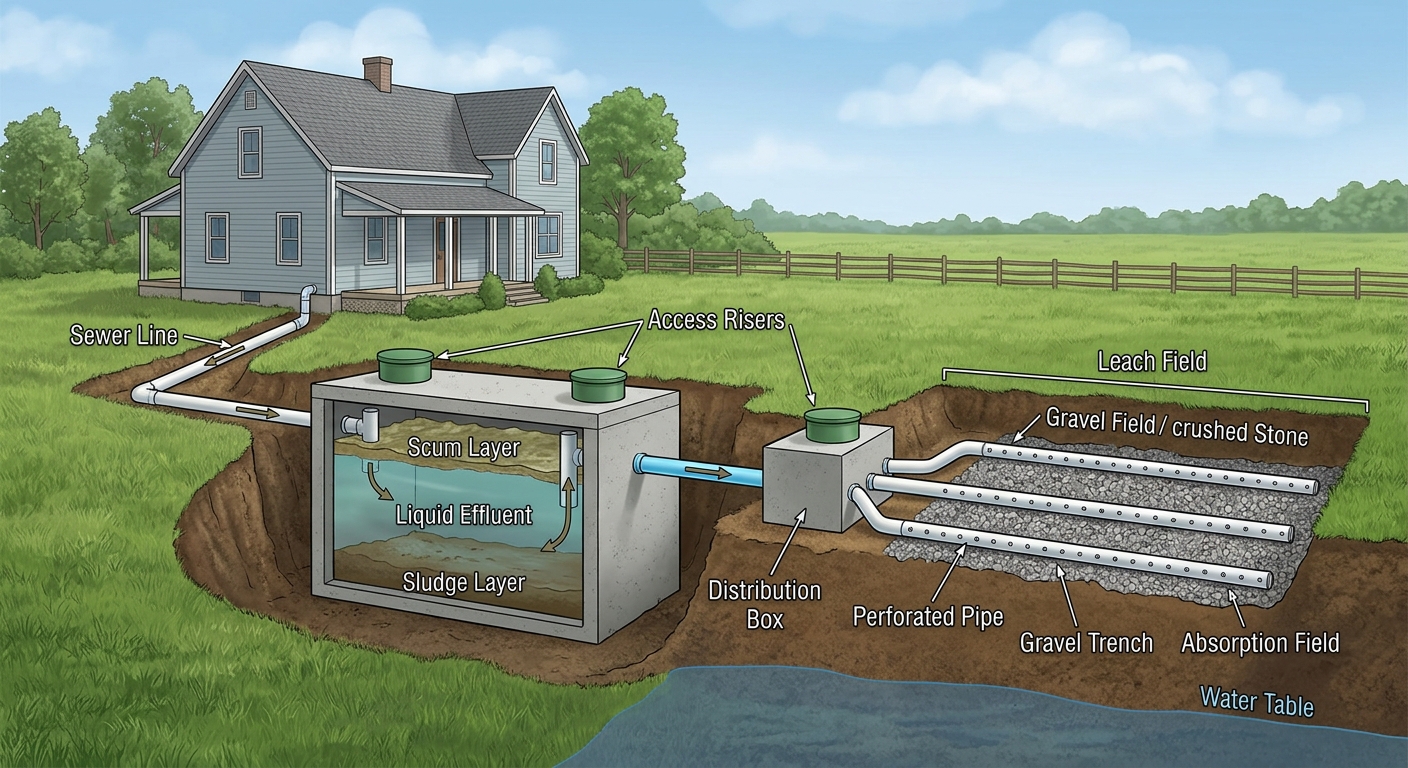
The Putnam County Department of Health says residential properties in the county usually have individual septic systems, not a public sewage system, which makes maintaining the system part of maintaining the home. A conventional system has a tank and a drain field. If you are buying in Mahopac, Carmel, Kent, Putnam Valley, Southeast or Patterson, ask early whether the property is on septic, and whether it also has a private well.
Maintenance is part of ownership
The county health department recommends septic inspections every three years and says tank pumping is generally needed every three to five years. It also notes that a New York State MS4 requirement adopted in 2011 makes it mandatory to inspect and clean septic tanks every five years for systems in the New York City watershed and in impaired water bodies, with Oscawana Lake in Putnam Valley as an example. Ask your attorney or the health department whether a property you are considering falls under that rule.
What a Septic Evaluation Should Cover
Cornell's guide, Buying or Selling a House with a Septic System, lists what an evaluation should examine.
- The age of the system, and whether later additions or fixture changes still suit it.
- The tank size, type and access risers, and whether baffles and effluent screens work.
- Drainage and flooding near the tank and absorption area, including compaction from vehicle traffic.
- Signs of failure such as lush grass, standing water or odors.
- Improper water sources, such as roof or sump pump drainage.
- Separation from drinking water supplies and surface water.
Timing matters
The Cornell guide advises buyers to make sure the evaluation took place while the home was in normal use for the previous 30 to 60 days, because a vacant house can hide problems. It also notes that winter inspections can be more difficult, which is worth remembering for a November or December closing in Putnam County. Your mortgage lender or local rules may also require an inspection.
Test the well too
If the property has a drinking water well, Cornell says it should also be evaluated, and that you should consult the county health department. Because many Putnam County homes have both a well and a septic system on the same lot, ask your attorney how to schedule both before your contract deadlines.
Records to Request Before You Close
The Cornell guide says the county health department may hold construction permits and a certificate of completion showing when a system was installed or modified. If those records are missing, the system may be very old or may have been installed without approval. The health department is not the source for maintenance history, so ask the sellers for pumping receipts, inspection reports and any repair invoices.
- Permits and certificate of completion. Request them from the Putnam County Department of Health in Brewster, at 845 808 1390.
- Pumping and inspection history. Ask the sellers for dated receipts and reports.
- The bedroom count. Compare the legal bedroom count with the system's design.
- Any repair permits. Confirm that repairs were permitted and finished.
When a Bedroom Addition or Teardown Triggers Health Department Review
If you plan to renovate, the septic system can shape the project. According to the county's Bulletin HA-1, the town building inspector reviews the application first. If it adds a bedroom or replaces the home, the applicant goes to the Putnam County Department of Health for septic review.
What the bulletin says about additions
For a house built before 1989, any increase in potential bedroom count generally requires formal approval of septic plans, unless the system is already designed for the new count. For a house built after 1989, one additional bedroom may only require a tank upgrade under the repair program, while more than one additional bedroom requires formal plans. Additions that do not increase the bedroom count stay with the building department. An addition that encroaches on the septic system or reduces its expansion area requires formal approval.
What the bulletin says about teardowns
A teardown and rebuild, or a replacement after a fire or other catastrophic event, requires a septic evaluation by a licensed design professional. If the existing system does not meet current code, the professional must prepare plans for a current code system, or a best fit design if current code cannot be met. This matters if you are buying a Putnam County property as a rebuild candidate.
Signs of a Septic Problem and Where to Find Help
The health department's page on preventing septic failures lists puddles in the lawn, slow drains or backups, and unusually lush green grass over the system as warning signs. It says failure can also affect nearby wells and contribute to algae in lakes and ponds.
New York State offers a septic system replacement fund in specific Putnam County locations, and the county says to call the health department at 845 808 1390 to learn which communities are eligible. The Putnam County Housing Corporation lists income restricted grants for septic repairs, plus one for residents over 60 that may cover routine maintenance, at 845 225 8493.
A Putnam County Septic Checklist for Buyers
- Confirm septic and well. Ask early whether the home has both.
- Order the evaluation. Hire a licensed professional and ask about recent occupancy.
- Request county records. Get permits and the certificate of completion.
- Review maintenance history. Ask for pumping and inspection reports.
- Match the system to your plans. If you want another bedroom, ask the health department about review before you commit.
- Talk to your attorney. Ask how to protect your timeline if the report finds a problem.
Frequently Asked Questions About Septic Systems in Putnam County, NY
Do most Putnam County homes have septic systems?
Yes. The county health department says residential properties in Putnam County usually have individual septic systems rather than a public sewage system.
How often should a septic system be inspected and pumped?
The health department recommends inspections every three years and says tank pumping is generally needed every three to five years. Each town may set its own pumping limit, so check local law.
Is septic inspection mandatory in Putnam County?
For systems in the New York City watershed and in impaired water bodies, a State MS4 requirement makes inspection and cleaning mandatory every five years. Ask whether a specific property is covered.
What should a septic evaluation check?
It should check system age, tank condition, drainage, signs of failure, improper water sources and separation from wells and surface water, according to Cornell's guidance.
Where do I get septic records for a Putnam County home?
The Putnam County Department of Health may have construction permits and the certificate of completion. Ask the sellers for pumping and inspection receipts, since the health department does not keep those.
Can I add a bedroom to a home on septic in Putnam County?
Possibly, but a bedroom addition goes to the county health department for septic review. Depending on the home's age and the number of bedrooms added, you may need a tank upgrade or formal plans.
What happens if the system fails during my purchase?
Your options depend on your contract. Ask your attorney about repair terms, credits or a timeline extension, and ask the health department about permits for any repair.
Is there financial help for septic repairs in Putnam County?
There may be. New York State has a replacement fund in select locations, and the Putnam County Housing Corporation lists income restricted grants. Call the health department to check eligibility.
Talk to a Local Expert
Steven Scarnati, a licensed real estate salesperson with Real Broker NY LLC, grew up in Mahopac and helps buyers and sellers across Putnam County, Westchester County, Dutchess County and Fairfield County, CT. If you are comparing homes on septic and well in Putnam County, he can help you plan your due diligence and your timeline before you make an offer. Reach him at stevescarnatihomes@gmail.com or (845) 661-3469.
Schedule a consultation with Steve Scarnati.
This article is general information, not legal, engineering or financial advice. Rules, forms and requirements change, and your property may differ. Consult a New York real estate attorney, a licensed septic professional and the Putnam County Department of Health about your own property.
Categories
Recent Posts